Written scope
Ask for damage and repair, described in writing
Hail and wind do not always leave obvious damage. Storm damage roof repair in Des Moines, IA starts with an inspection of every slope: hail bruising, lifted shingles, failed flashing, and soft decking. Then what the storm broke is repaired. Ask for a written scope to share with the insurer.
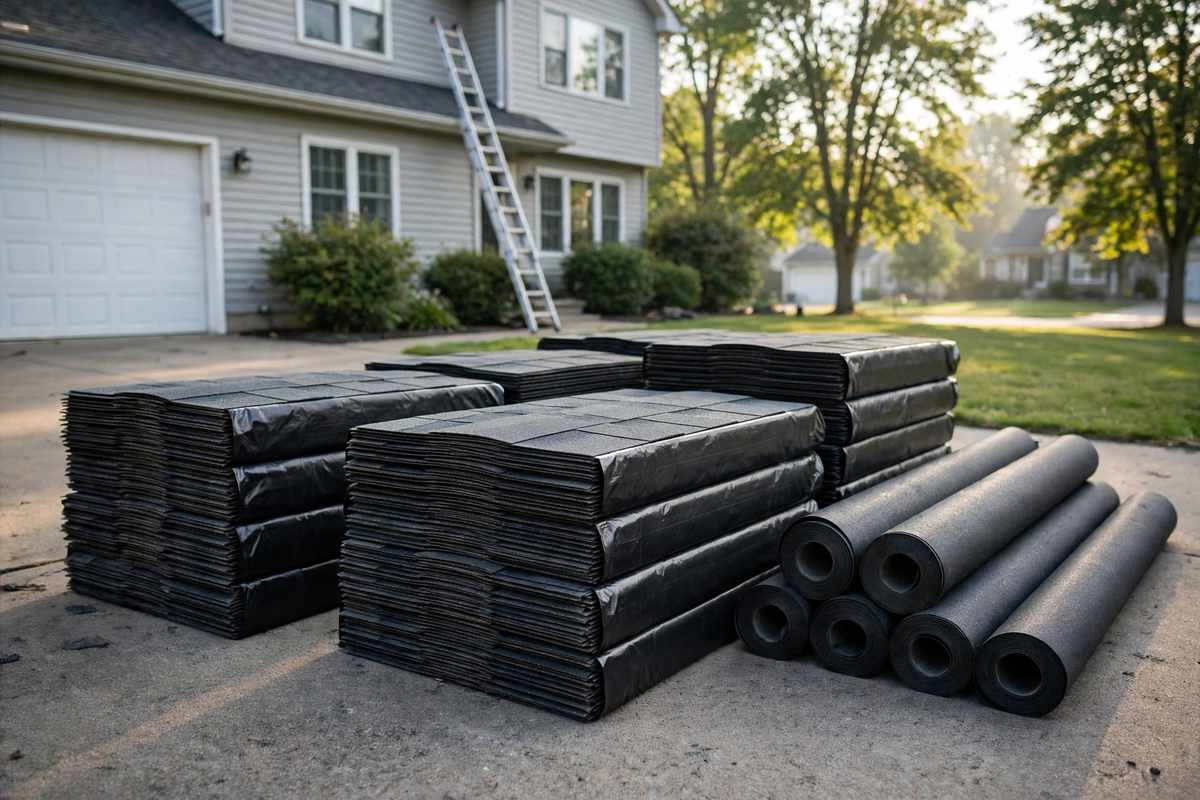
Storm work is inspection first, repair second. Here is what a storm damage visit covers, from the first walk of the roof to the finished repair.
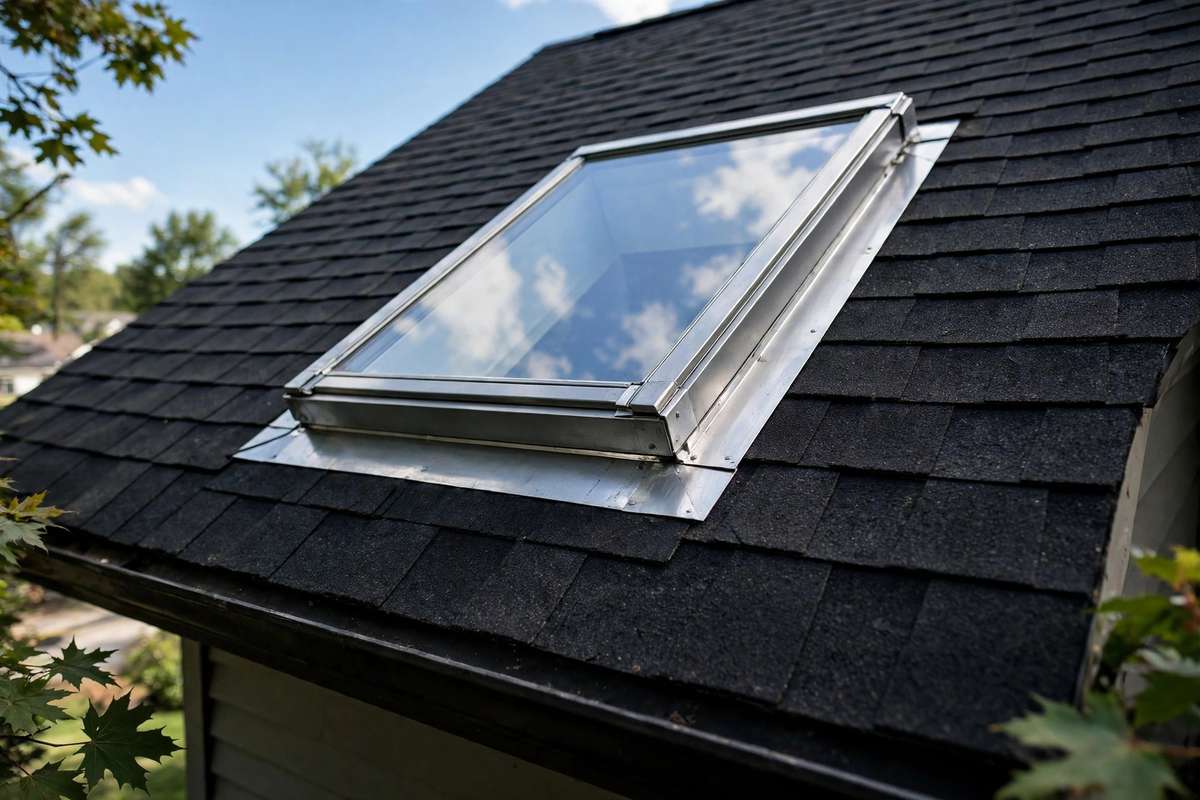
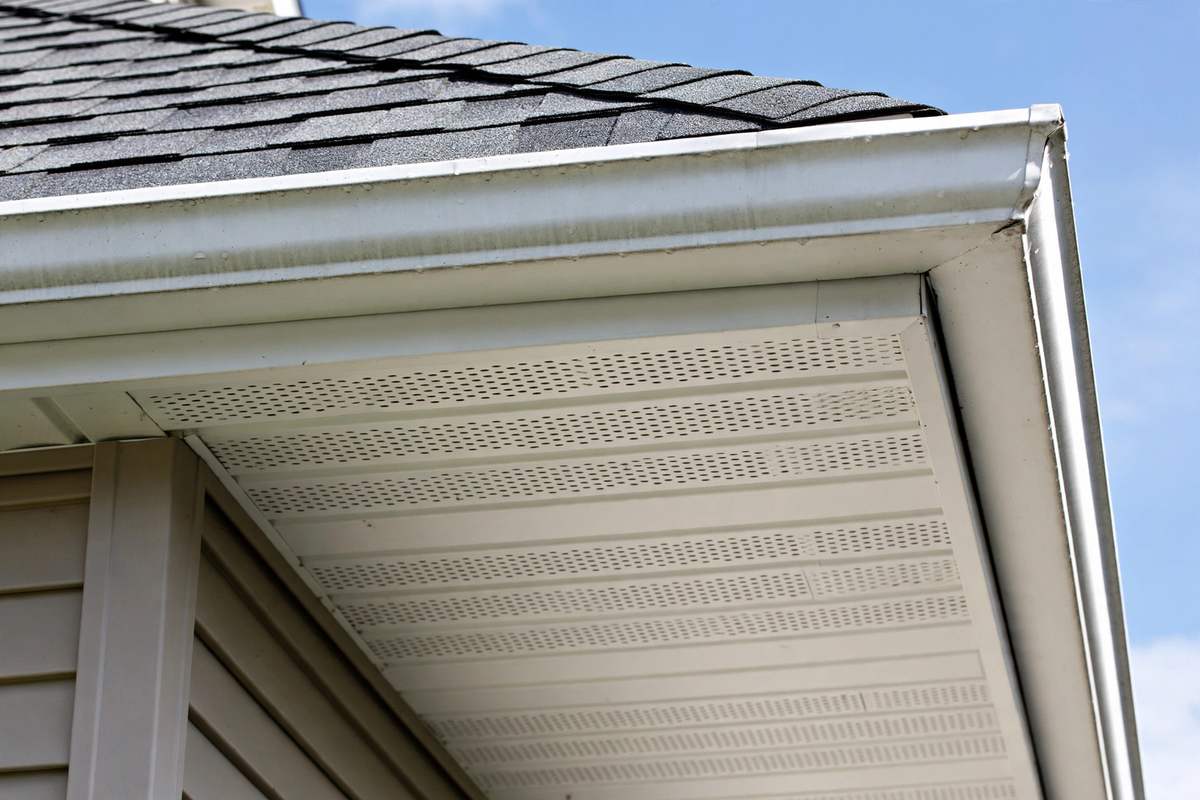
Hail and wind damage on Des Moines homes is repaired slope by slope. The inspection documents what the storm did before any repair is scoped.
Two-story homes and multi-unit houses take storm damage across more slopes and more flashing. Ask for every slope inspected and documented before the repair is scoped.
Storm damage roof repair in Des Moines, IA is the work of finding what a storm did to a roof and repairing it. Hail bruises shingle mats and knocks granules loose. Wind lifts courses, tears ridge caps, and drives rain under edges. Both can hide: hail bruising is often invisible from the ground, and lifted shingles may not leak until the next heavy rain. The inspection documents each slope with photos, and the repair addresses what the photos show.
Des Moines hail runs mainly from mid-April through early September, with June the busiest month, and the area has seen 100 hail days within 15 miles since 2010. On August 10, 2020, a derecho brought a 75 mph gust recorded at Des Moines International Airport. Homes in Beaverdale, Drake, and Merle Hay face the same storm track, and the inspection is the same on every roof: document first, repair second. If the damage is limited, a roof repair may be the right scope.
Document first, repair second. The photos decide the scope.
Here is the typical sequence after a storm, from the first inspection to the finished repair.
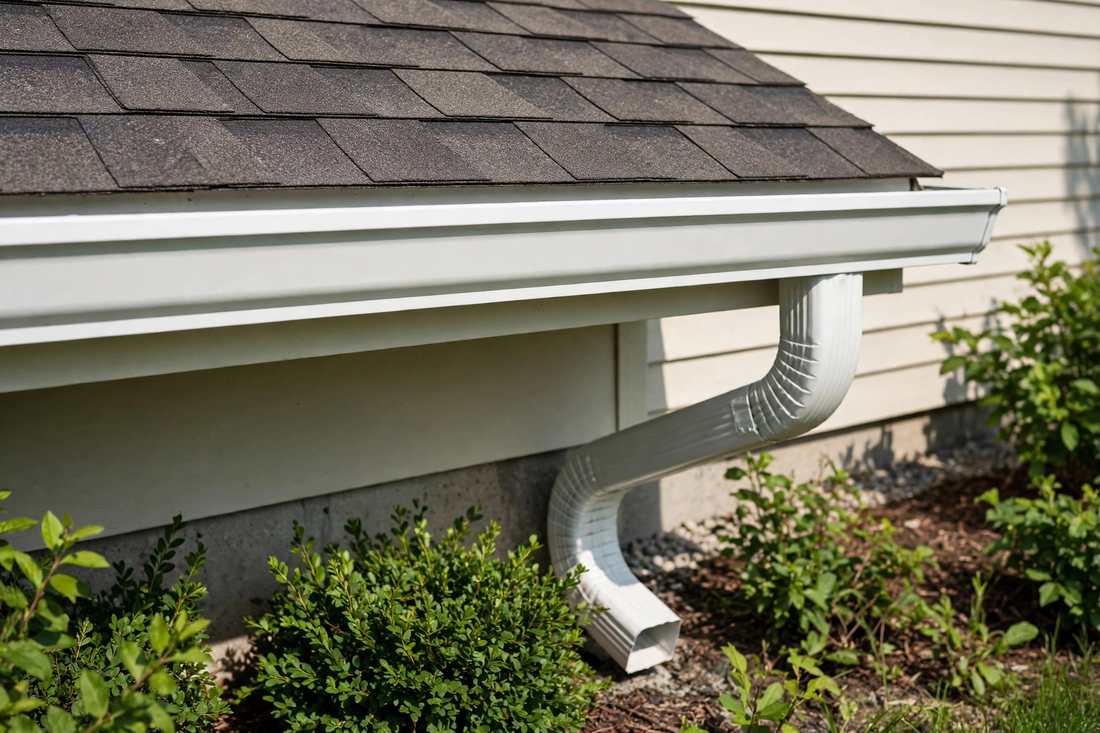
Every slope is walked, shingles, flashing, valleys, vents, and gutters are checked, and the attic side is looked at. Hail hits, lifted courses, and soft decking get noted slope by slope.
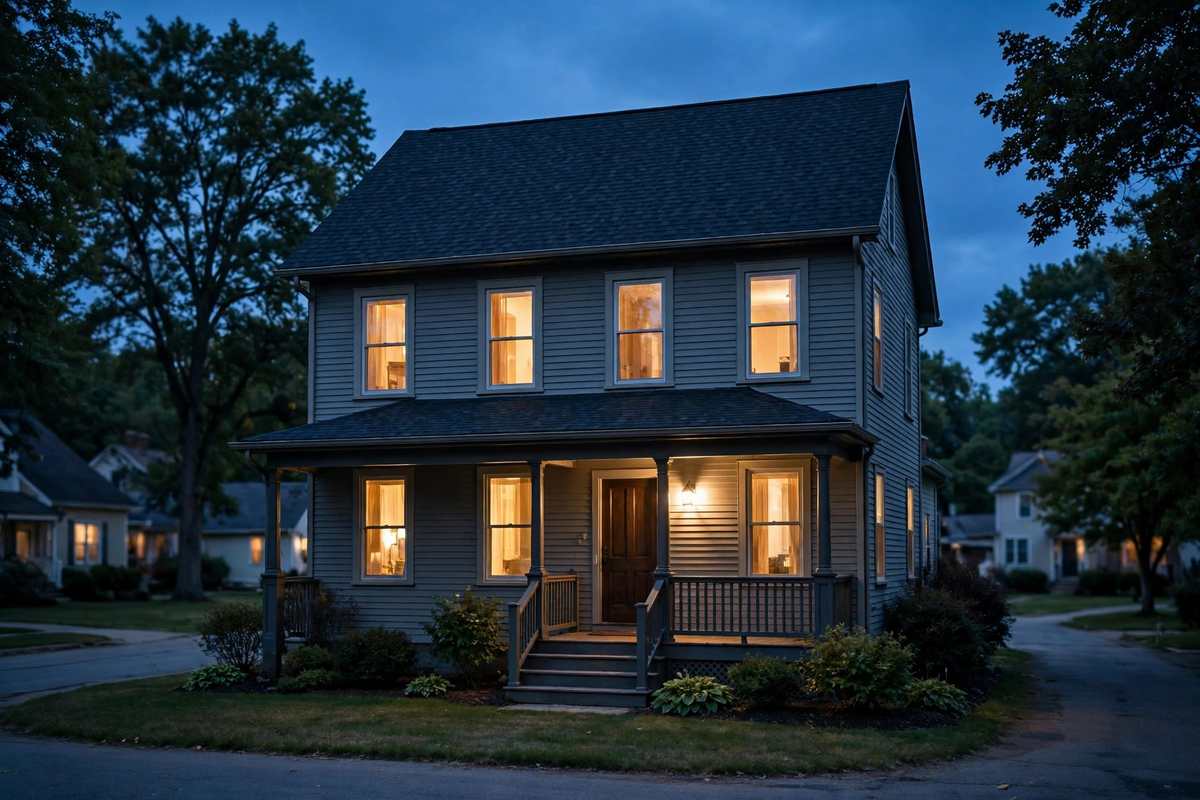
Ask for photos and a written scope describing the damage and the repair. The scope can be shared with the insurer. Coverage decisions belong to the insurer.
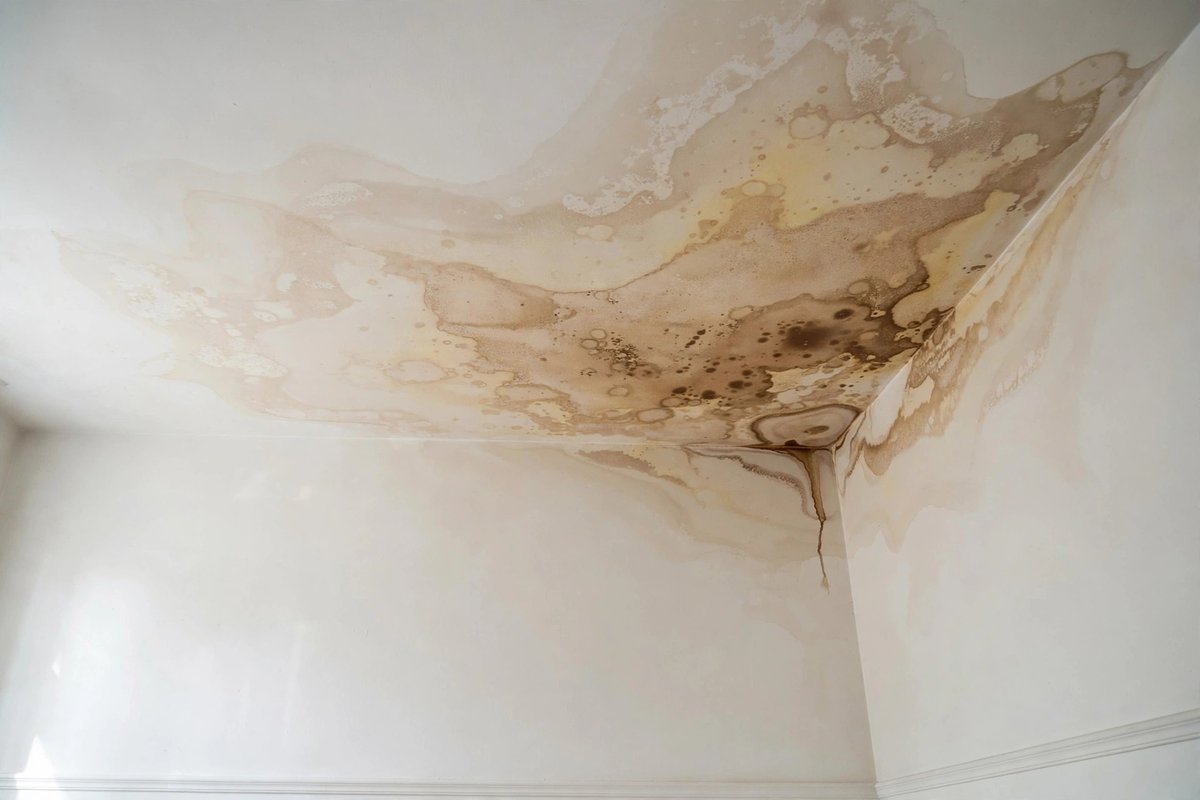
Materials are agreed, matching profile and color to the existing roof, and the flashing and ventilation details are confirmed before work starts.
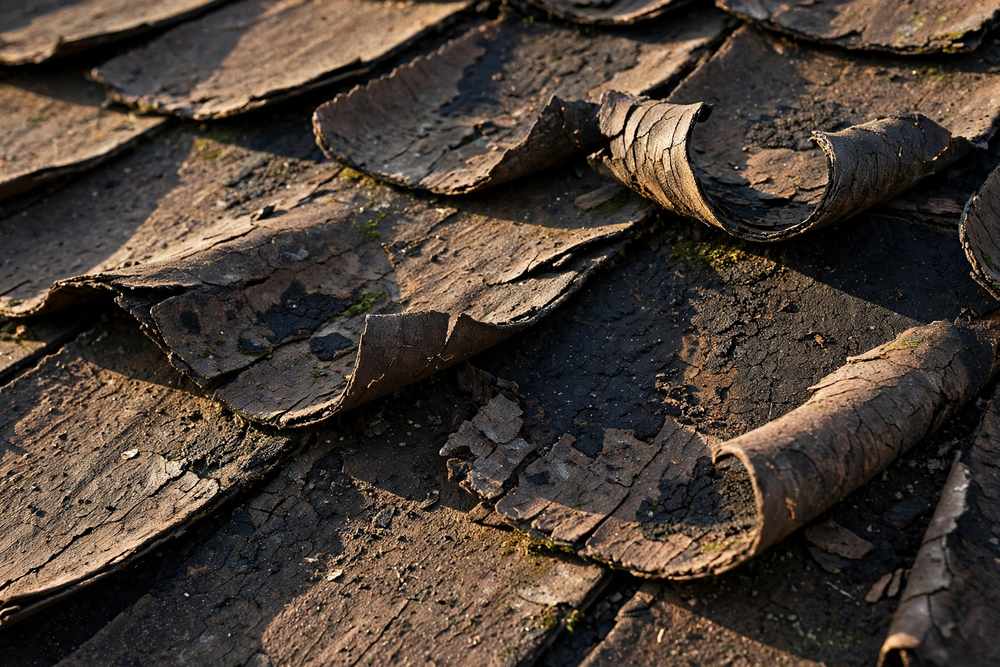
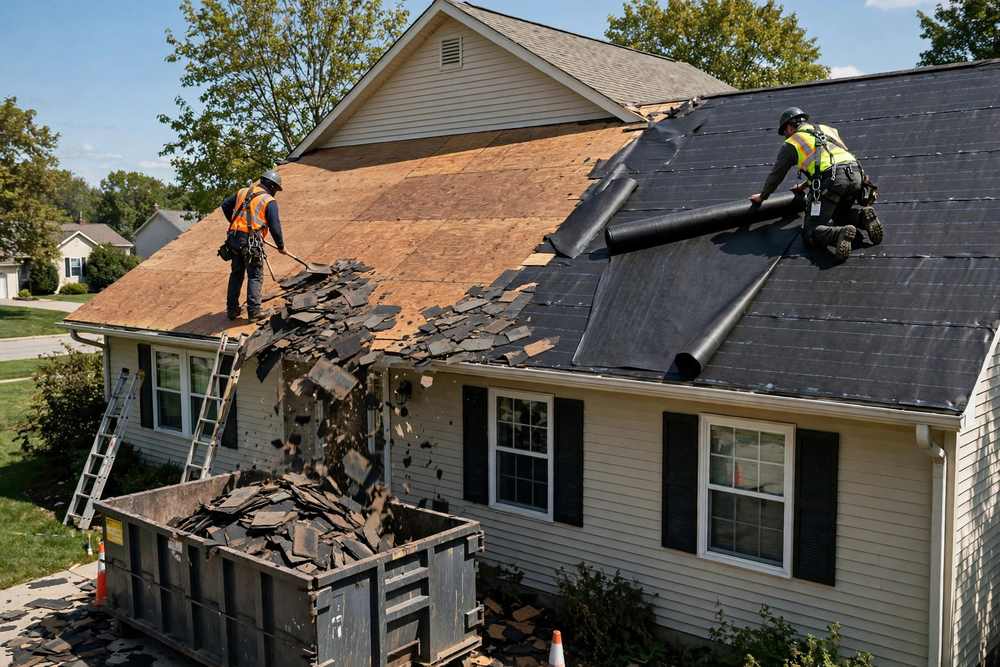
Bruised and missing shingles get replaced, failed flashing gets rebuilt, and damaged decking gets replaced. Ask for the work area kept clean and the yard magnet-swept.
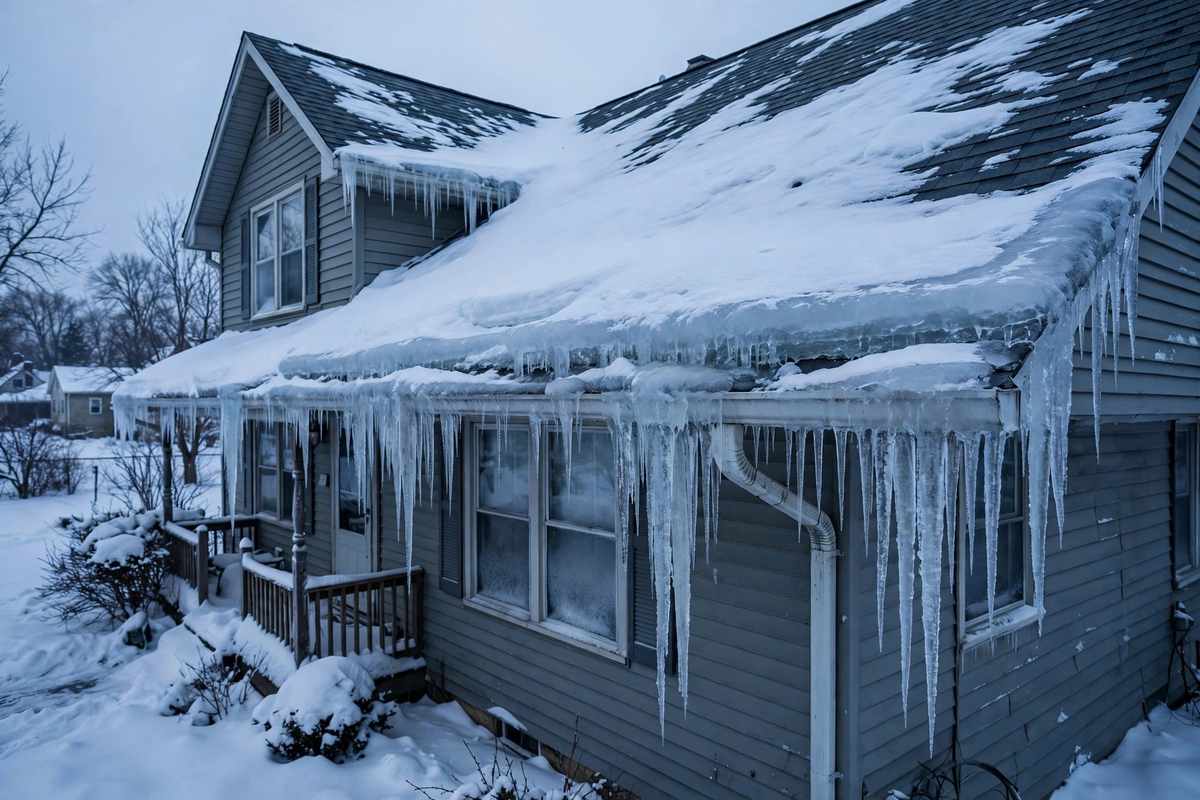
Ask for the finished work walked through and the photo record handed over. Anything that needs attention after the next storm is worth noting in the summary.
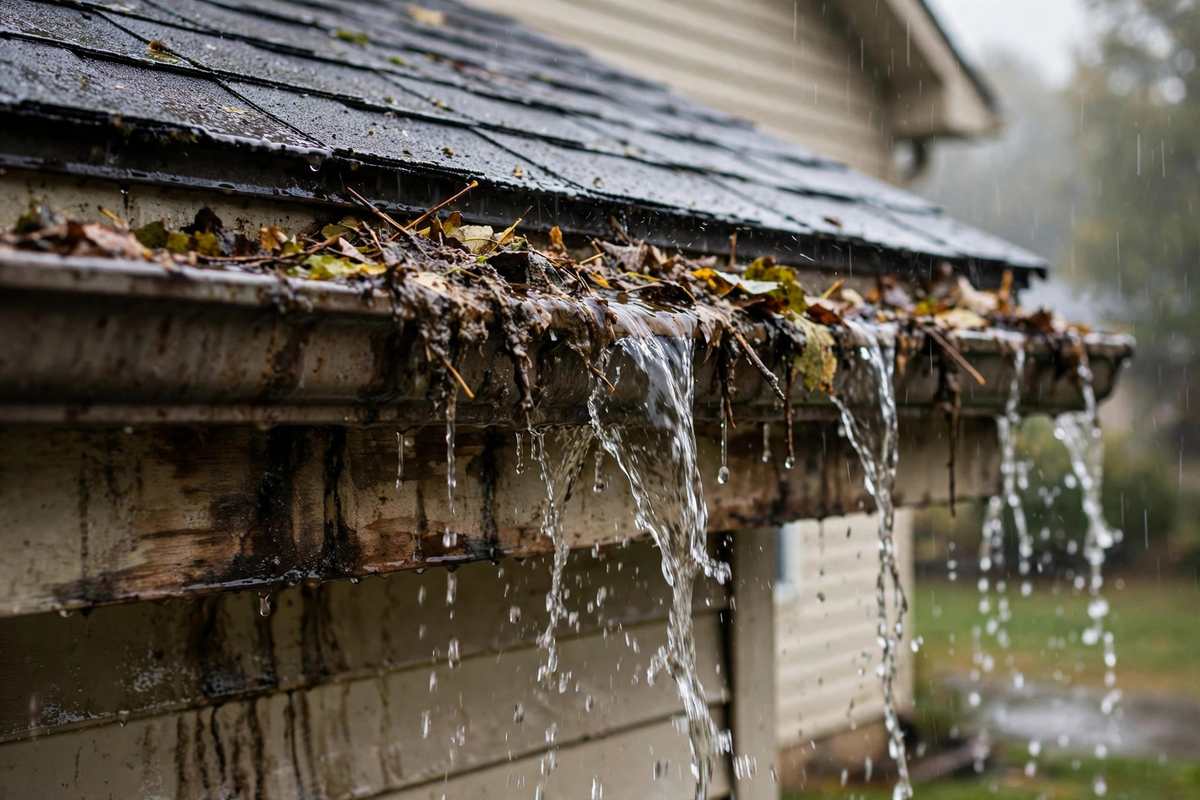
Shows wet zones behind drywall and under shingles after wind-driven rain, revealing damage a visual check misses.

Confirms where water is actually present in the deck after a storm, instead of guessing from stains.
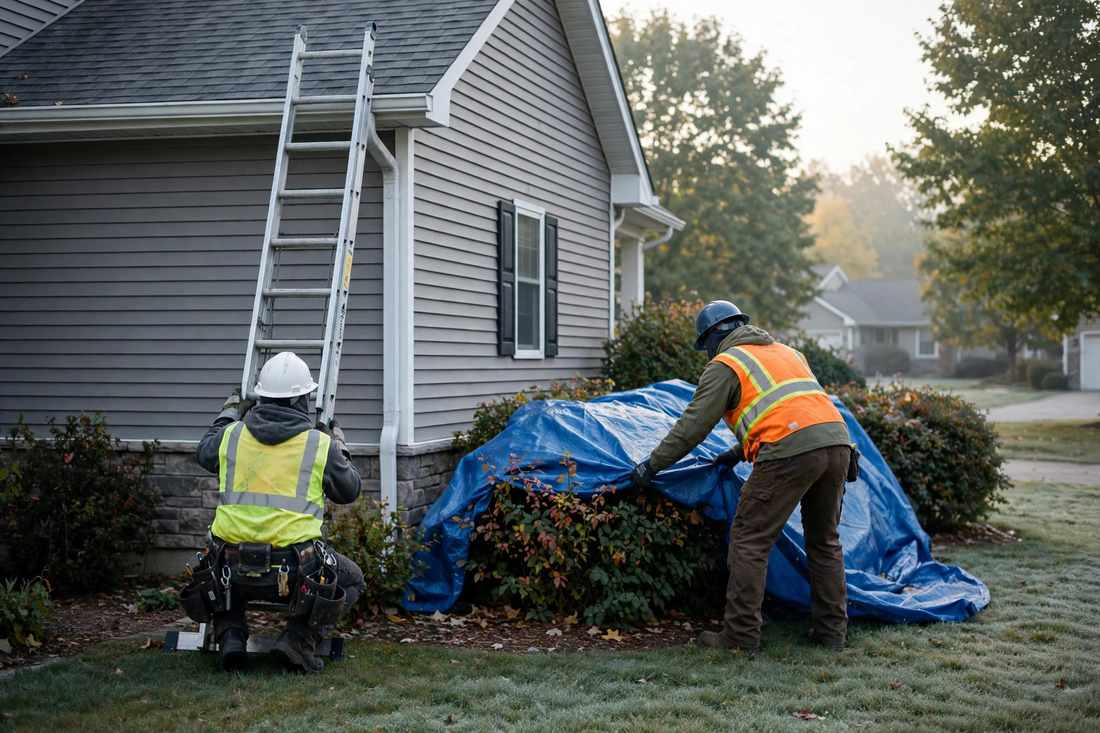
Sets replacement shingles to the system pattern and depth so repairs hold in the next wind.
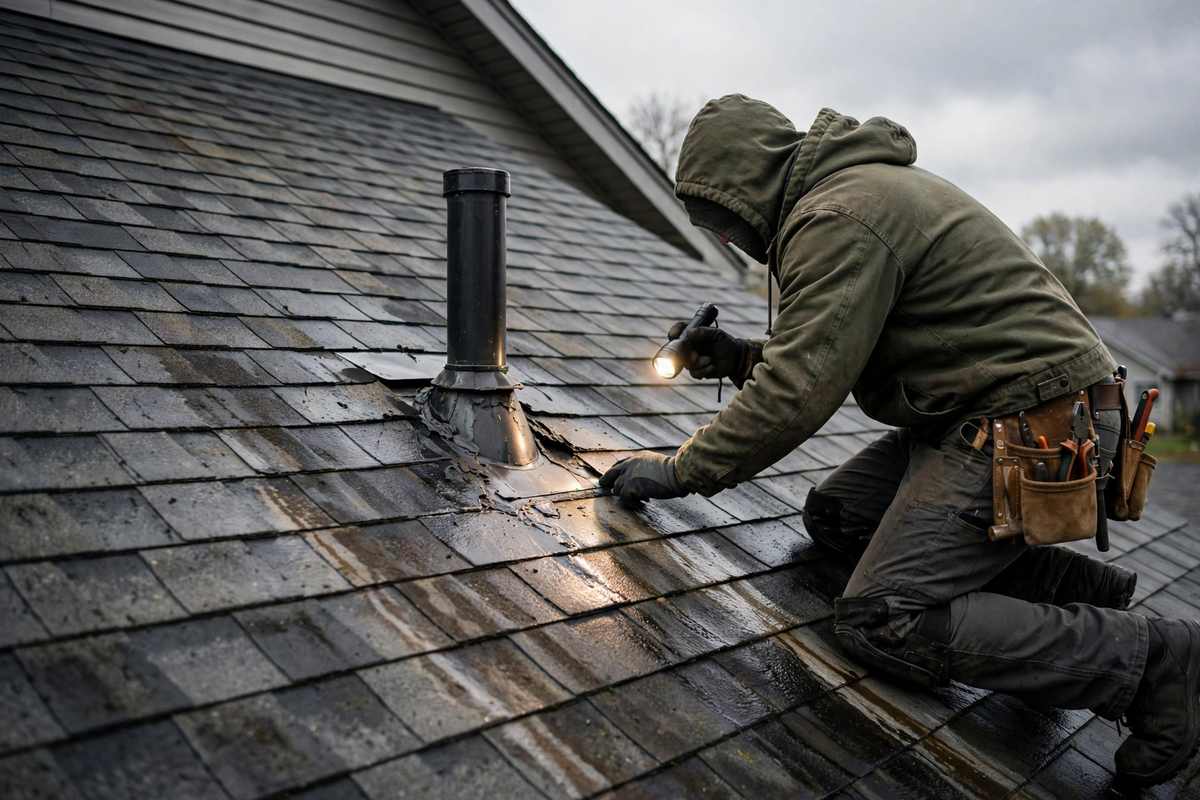
Cuts replacements to fit and removes damaged shingles cleanly, so repairs blend into the existing courses.

Safe access to steep pitches and two-story roofs, so every slope gets inspected, not just the easy ones.
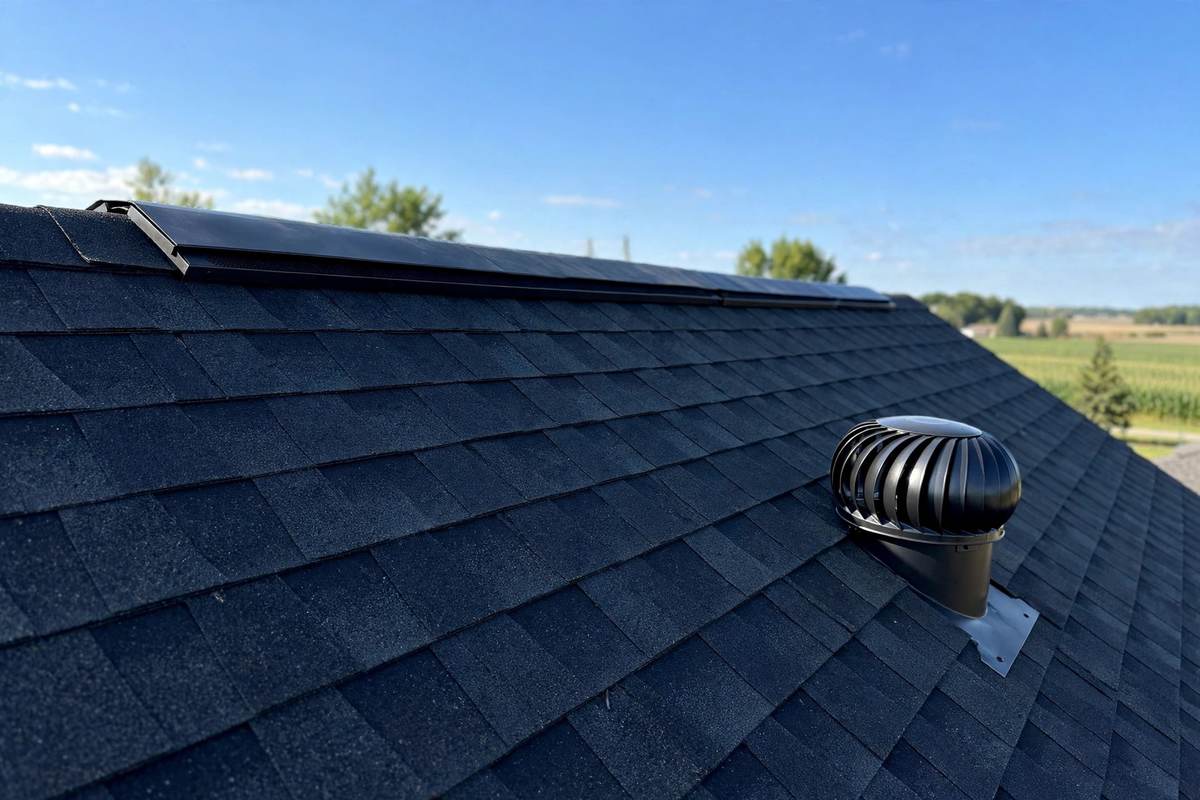
Marks straight courses and opens damaged sections cleanly for flashing and deck repair.
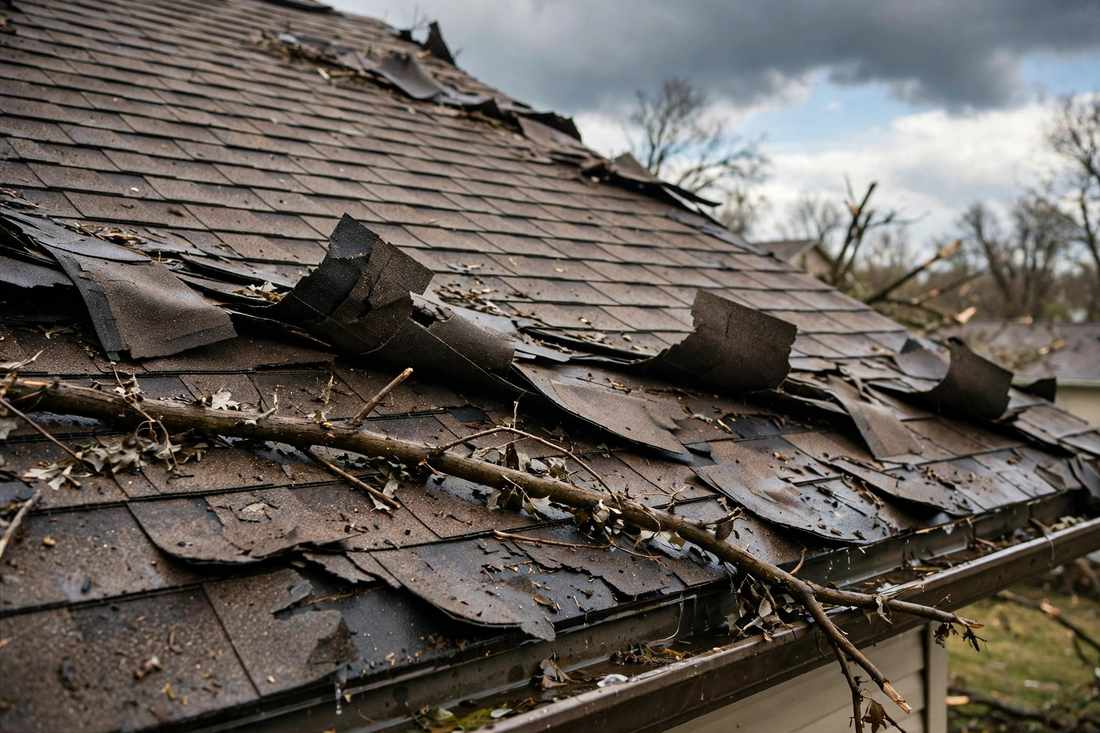
Every slope gets photographed and noted, so the scope reflects the whole roof rather than the worst slope alone.
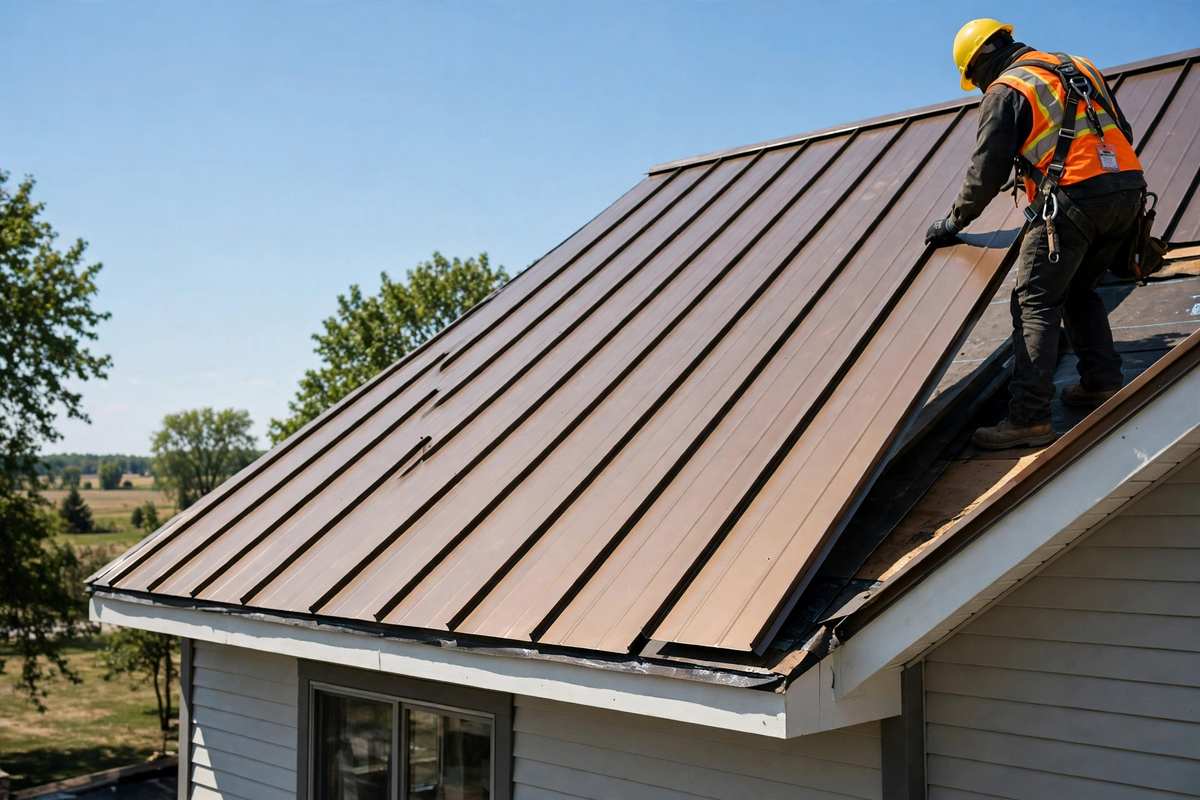
Shingles and flashing go in to the system specification, including nail pattern, overlap, and ice barrier placement.
Dents in gutters and granules in the downspouts mean hail hit the roof, even if the shingles look sound from the ground. An inspection looks for bruising, documents it with photos, and scopes the repair slope by slope.
Wind lifts courses and tears ridge caps, and the damage grows with every following storm. Missing shingles are replaced, lifted courses are resealed and re-nailed, and torn ridge cap is rebuilt.
Ice dams form when attic heat melts snow that refreezes at the cold edge. Water backs up under the shingles and into the attic. The damage is repaired and ventilation and eave flashing are addressed so the cycle stops.
A low-slope porch or garage roof that leaks after a storm needs membrane and flashing work. Seams, drains, and tie-in flashing are inspected, then the failed sections are repaired with matching membrane.
Des Moines sits in a hail corridor with a defined season, and the housing stock ranges from steep Victorians to low-slope ranches. Storm inspection is the same discipline on every roof: every slope checked.
A spring hail storm bruises shingles across the south and west slopes. Granules collect in the gutters, and the shingle mat is bruised in many places. The roof does not leak yet.
A typical scope documents the hail hits with photos and measurements slope by slope, replaces the bruised courses with matching shingles, and provides a written scope to share with the insurer.
An inspection after any hail storm catches bruising while the evidence is still visible on the shingles.
Straight-line wind tears the ridge cap and lifts courses along the windward edge. The underlayment is exposed in places, and the next rain will find it.
A typical scope replaces the ridge cap, reseals and re-nails lifted courses, and rebuilds any torn flashing. The repair is matched to the existing roof.
After any high-wind event, a look at the ridge and edges from the ground is worth it. Lifted courses are visible as uneven lines along the roof edge.
A low-slope porch roof leaks at a seam after a storm. The membrane is split near the seam, and the wall tie-in flashing is lifting.
A typical scope repairs the split seam with matching membrane, rebuilds the wall flashing, and checks drainage so water leaves the low slope.
Seams and drains on low-slope roofs deserve a yearly look, since storm stress shows at seams first.
Storms leave four common kinds of damage. Here is what each one looks like.
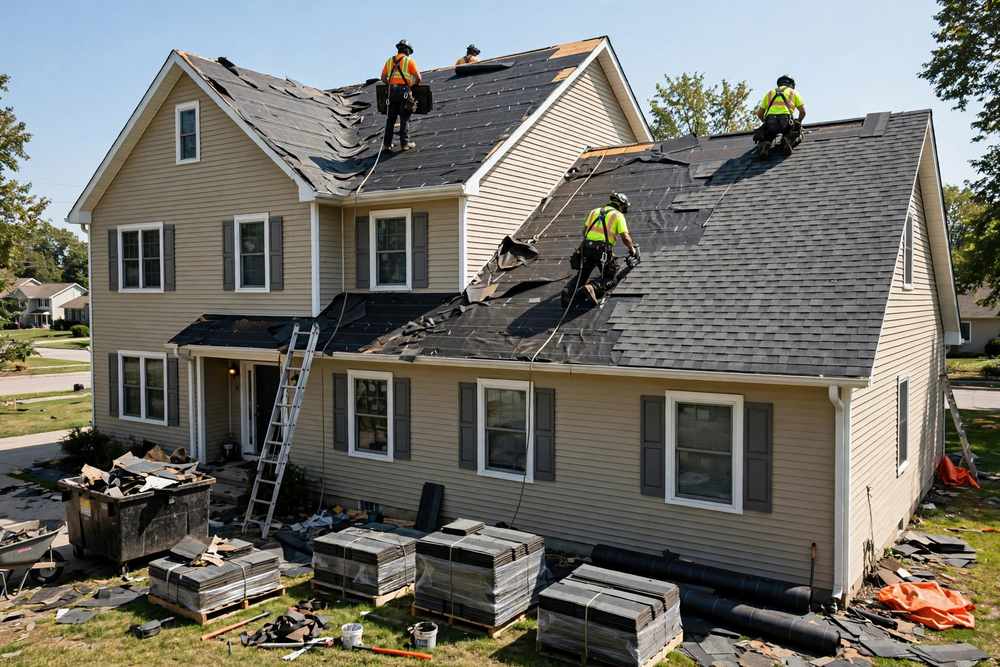
Missing shingles are replaced, lifted courses are resealed and re-nailed, and torn ridge cap is rebuilt. One missing shingle exposes the underlayment, and the next rain drives water into the deck.
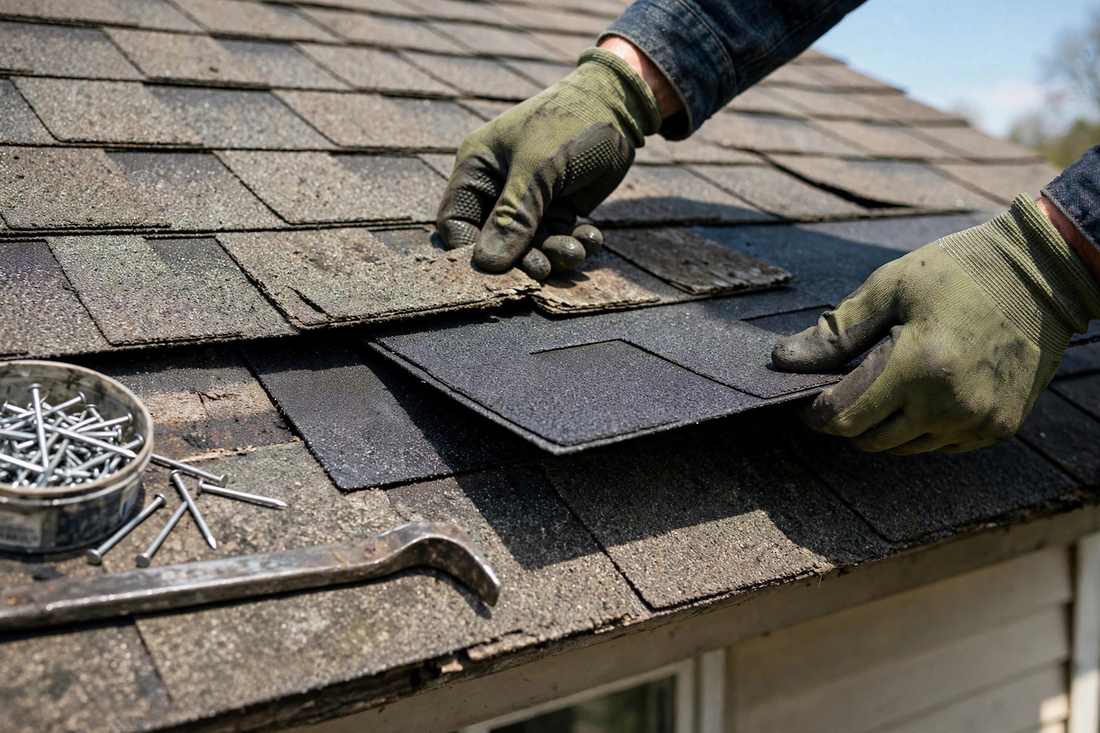
Bruising is documented with photos slope by slope and the affected courses are replaced with matching shingles. Hail bruising shortens shingle life even before leaks appear.
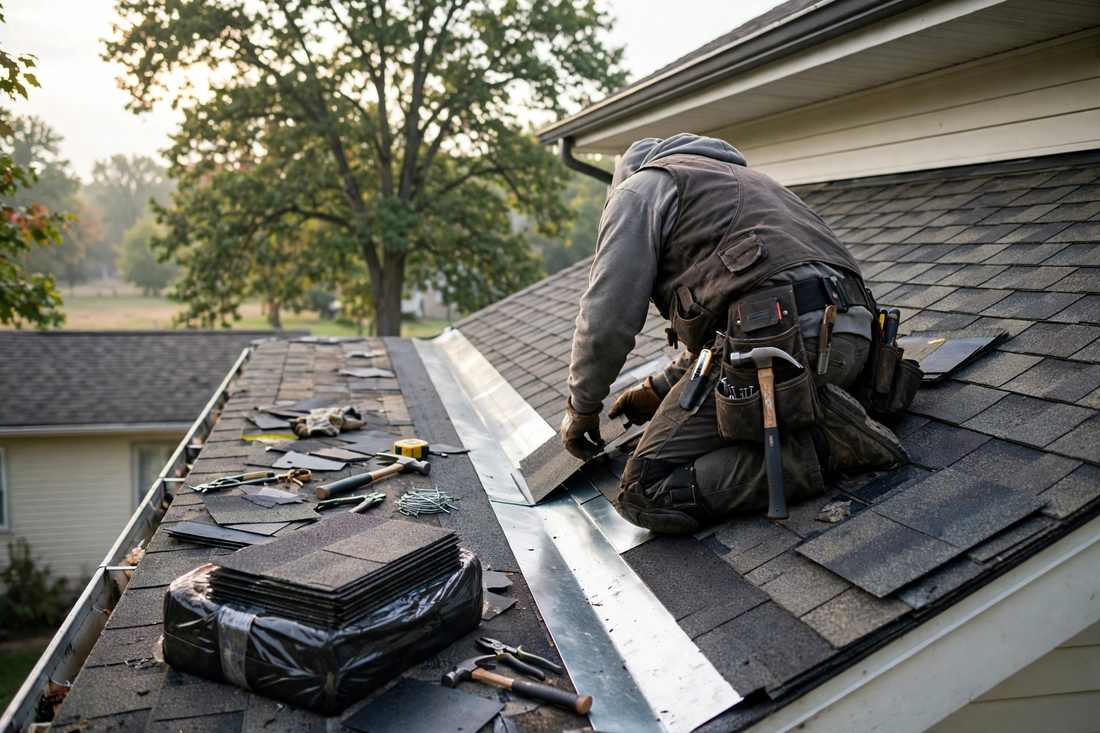
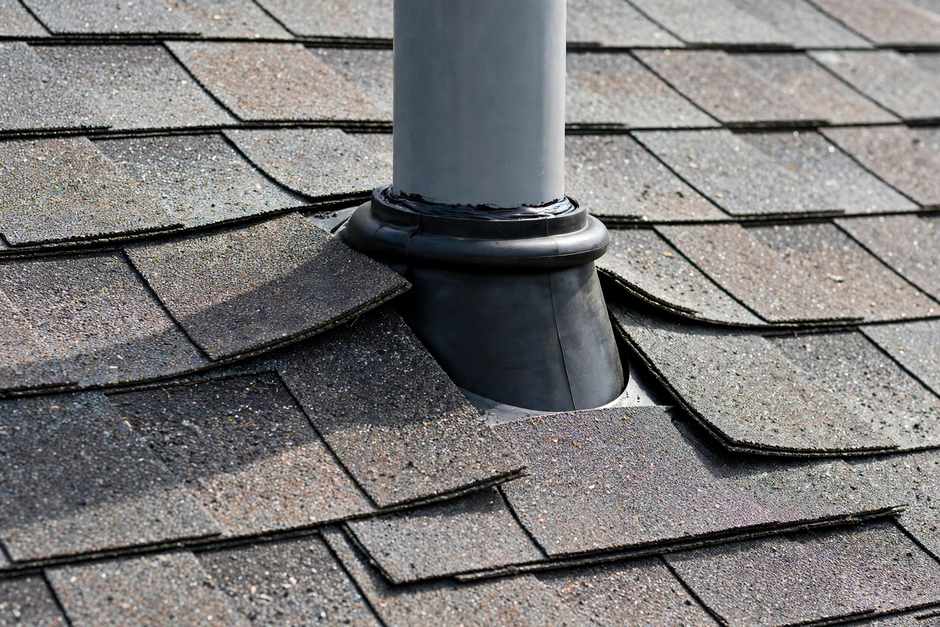
Wind works flashing loose at chimneys, walls, and skylights. The flashing is rebuilt with proper step and counter flashing and the repair is water-tested.

Storm debris and granule buildup slow drainage, and water backs up at the fascia. Pitch and flow are checked, damaged fascia is repaired, and downspouts are confirmed to carry water away from the foundation.
Storm damage that is left alone grows. A lifted course takes more shingles with the next wind, and a bruised mat cracks and leaks. Repairing after the storm stops that progression.
Ask for photos and a written scope describing the damage and the repair, to share with the insurer. Coverage decisions belong to the insurer.
Replacement shingles are matched in profile and color to the existing roof, so repairs blend into the surrounding courses instead of standing out.
Storm repair covers shingles, flashing, decking, and ventilation as one system. Fixing only the visible shingles leaves the flashing and deck to fail next.
Records worth asking for, to keep and share.
Ask for damage and repair, described in writing
Ask for every slope photographed and noted
Storm damage is often less visible than homeowners expect. Knowing what to look for helps you decide when an inspection is worth arranging.
Hail bruises the shingle mat and knocks granules loose. The damage shortens roof life even before leaks appear, and it is often invisible from the ground.
Wind lifts courses from the edges and ridge first. Once a seal breaks, the next storm takes more. Resealing and re-nailing lifted courses stops the progression.
Water from storm damage can travel along the deck and show up weeks later as a stain. Iowa law, in Iowa Code section 103A.71, prohibits deductible rebates and claim negotiation by contractors. Damage documentation is for the record; coverage decisions belong to the insurer.

Questions about an address in Des Moines? Call (515) 385-2566 and ask.
The price depends on what the storm did: the number of slopes affected, whether shingles, flashing, or decking failed, and the pitch and layers of the roof. Ask for an inspection, photos, and a written scope with the price before work starts.
Coverage decisions belong to your insurer and depend on your policy. Ask for photos and a written scope to share with your insurer. Iowa law, in Iowa Code section 103A.71, prohibits deductible rebates and claim negotiation by contractors, and non-compliant storm-repair contracts are void.
Look for missing or lifted shingles, dents in gutters and downspouts, granules collecting in gutters, and ceiling stains after the storm. Hail bruising is often invisible from the ground. An inspection with photos documents what the storm did, slope by slope.
Claim deadlines come from your insurance policy, not from the contractor, so check the policy or ask your insurer. Documenting the damage with photos soon after the storm helps either way, since hail evidence fades as shingles weather.
Call ZT Contracting LLC at (515) 385-2566 to arrange a storm inspection, and ask for every slope documented with photos and a written scope before any repair work.
Call (515) 385-2566, Monday through Saturday, 8 AM to 6 PM, to arrange a time to look at your roof. We are closed on Sundays.