Roofing in Waterbury, on Rolling Topography

Roof replacement in Waterbury, Des Moines, IA, serves a neighborhood developed in three phases between 1906 and 1940, on streets laid out to follow rolling topography, with a mature tree canopy overhead. ZT Contracting LLC provides roof repair, replacement, leak repair, storm damage repair, and inspections for homes here. Published descriptions of Waterbury's edges disagree, so this page states no single street-bound set. Call (515) 385-2566, Monday through Saturday, 8 AM to 6 PM.

  • Address3501 Bowdoin St, Des Moines, IA 50313, United States
  • Phone(515) 385-2566
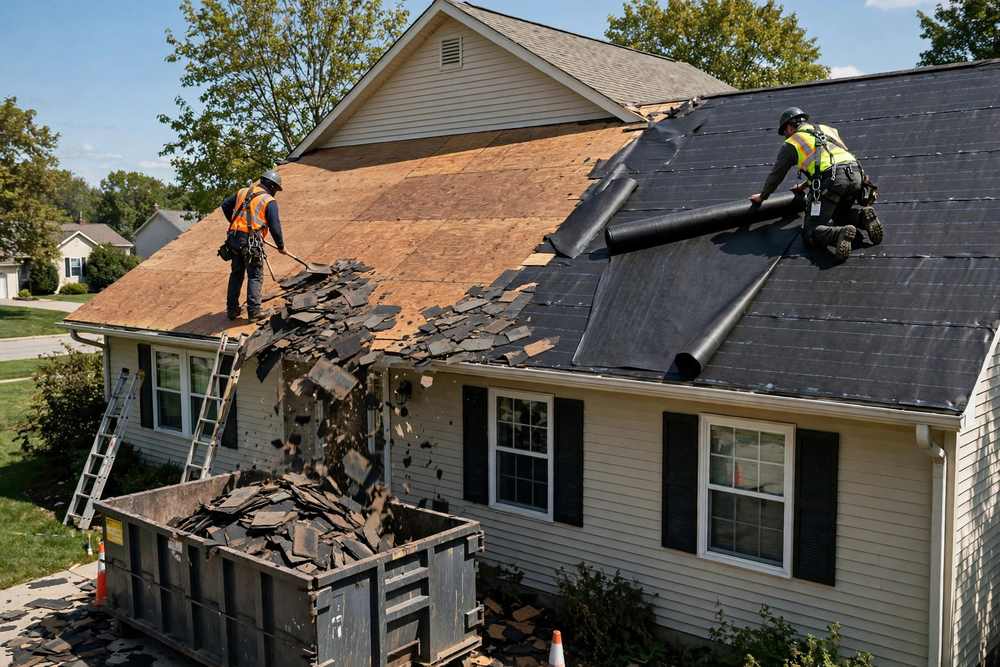
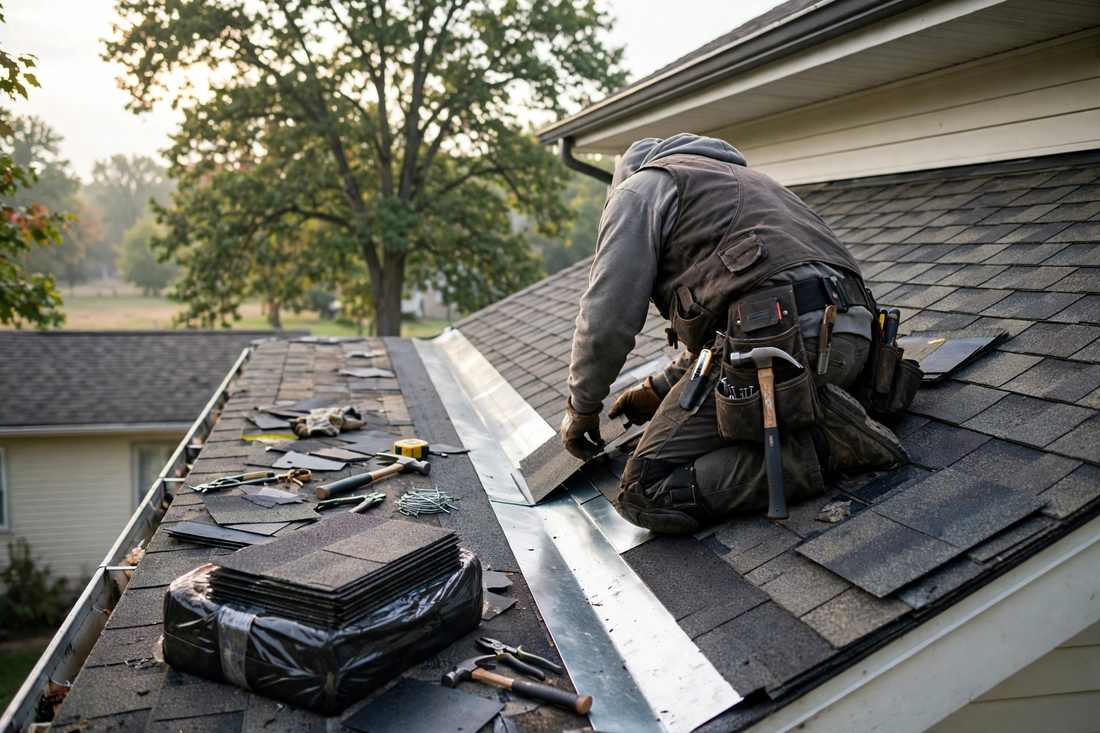
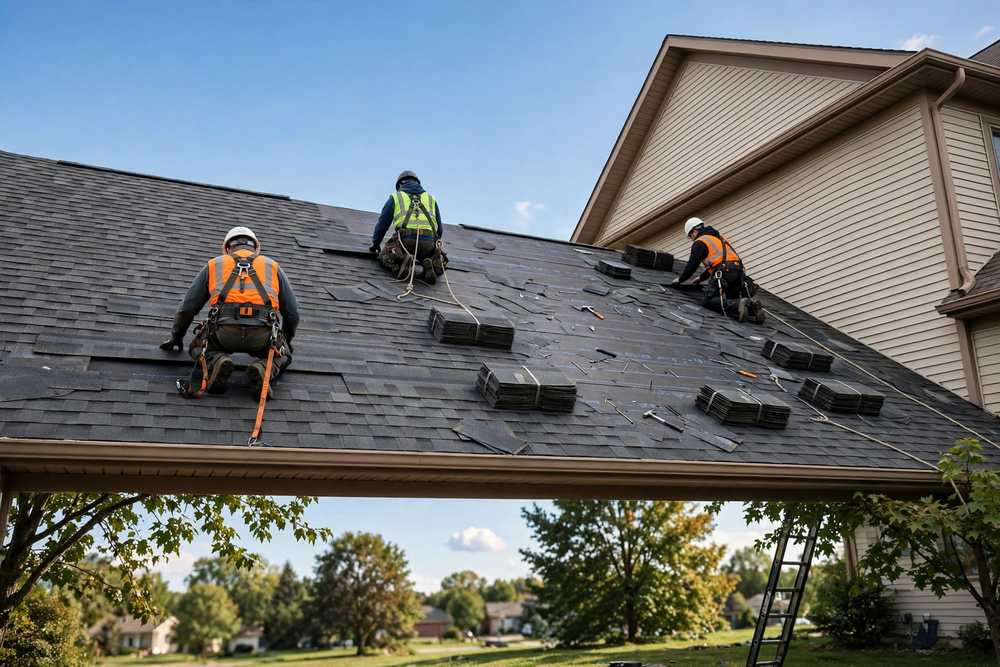
Roofing crew at work on a home in Waterbury, Des Moines, Iowa

Roofing in Waterbury, Des Moines

  • 5.0 stars from 16 Google reviewsAll 16 reviews five stars
  • Monday–Saturday, 8 AM–6 PMClosed on Sundays
  • 3501 Bowdoin St, Des MoinesRoofing contractor, Des Moines, IA
  • Roof repair and replacementLeak, storm, and inspection work too

Three Phases of Building on Rolling Ground

Waterbury developed in three phases, 1906 to 1911, 1923 to 1925, and 1931 to 1940, according to the association history, the 2007 strategic plan, and a 2011 council document: Shriver's Grand Avenue Heights; Frick's Walnut Hill Place, north of Grand Avenue and west of 56th Street; and F. C. Waterbury's Oak Lawn Place, north of Ingersoll Avenue, from 49th to 54th Streets. The first home, at 607 Country Club Boulevard, was completed in 1900 for Frank Calvin Waterbury. The neighborhood is described as one of the first designed to follow the topography, and it is primarily single-family, with some multi-family homes along and near Ingersoll Avenue.

The setting shapes the roofing picture. A mature tree canopy and rolling terrain define the neighborhood, there is no city park inside its bounds, and Greenwood and Ashworth Park, with the Art Center, sits immediately south across Grand Avenue. Styles named in secondary sources, a realtor video and an AI-generated guide, are Tudor Revival, Colonial Revival, Craftsman, and mid-century, and they are labeled secondary here rather than stated as verified fact. Roof forms are inferred only: large early-20th-century pitched roofs with complex forms, offered as general guidance. The Ingersoll amusement-park land, acquired in 1917 by the F. C. Waterbury family, lies in Waterbury. No historic district covers the neighborhood, and no flood-zone claim is made.
Residential roofing work

Roofing Services for Waterbury Homes

The services below are written for large early-20th-century roofs on rolling, tree-covered lots. Each service page explains the work; the notes here tie it to Waterbury's topography and canopy.

How Roofing Work Proceeds in Waterbury

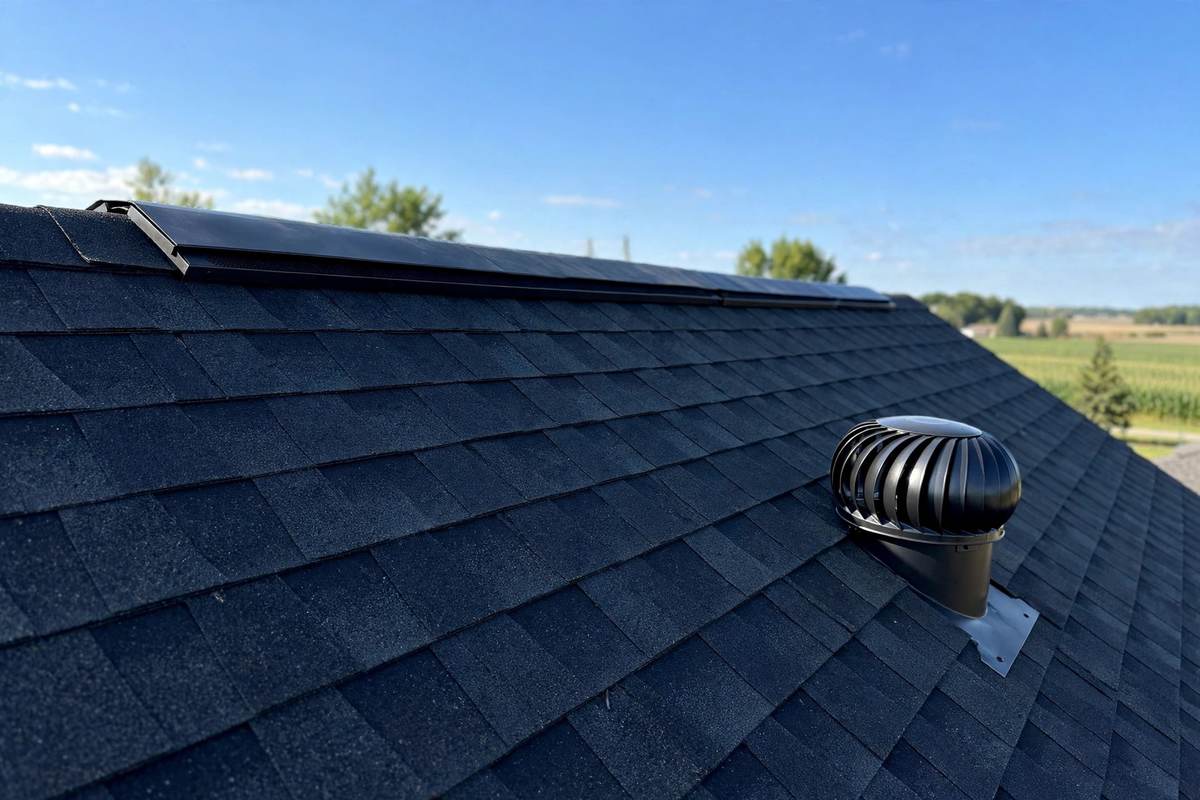
Roof Replacement — second view

Roof Replacement in Waterbury

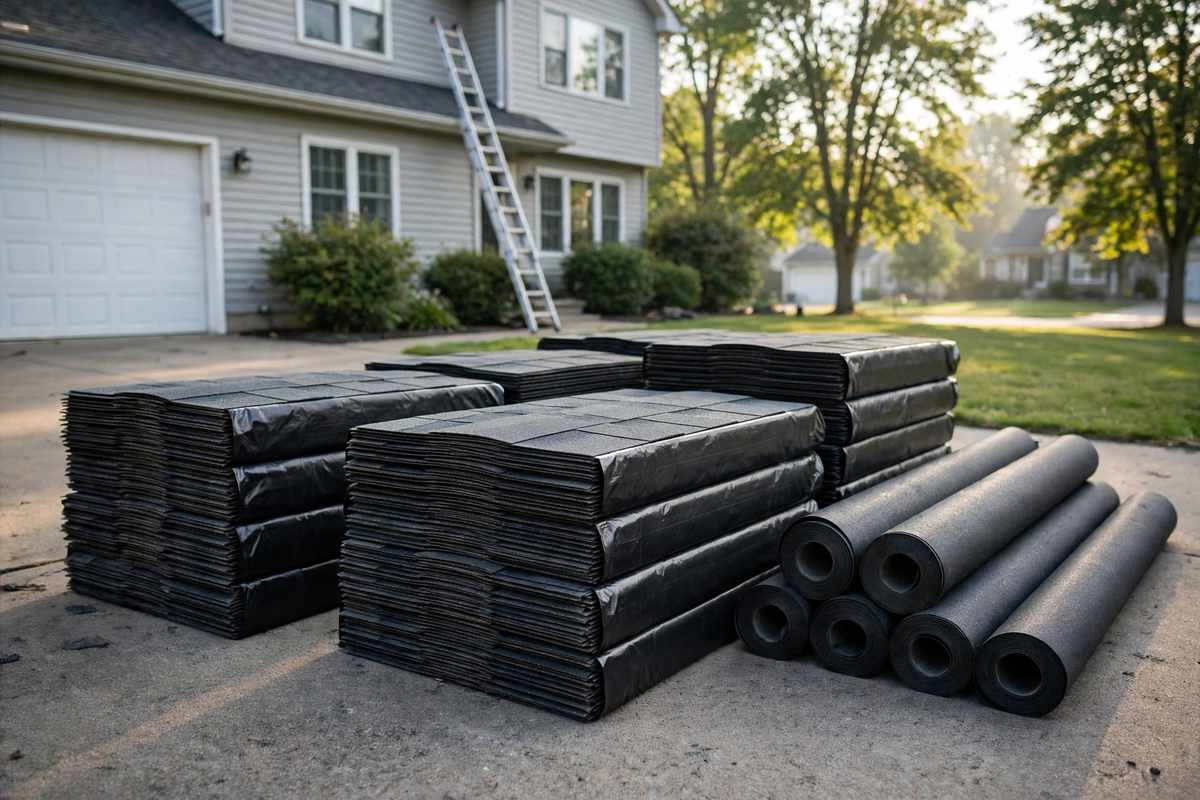
Planning a replacement starts with the roofline: large pitched forms, valleys, and dormers, then the decking beneath and the drainage pattern of the sloping lot. The scope should follow the house's own form, naming the ice barrier and the flashing at every joint.

  • Large, complex rooflines
  • Lot drainage
  • Ice barrier on re-roofs
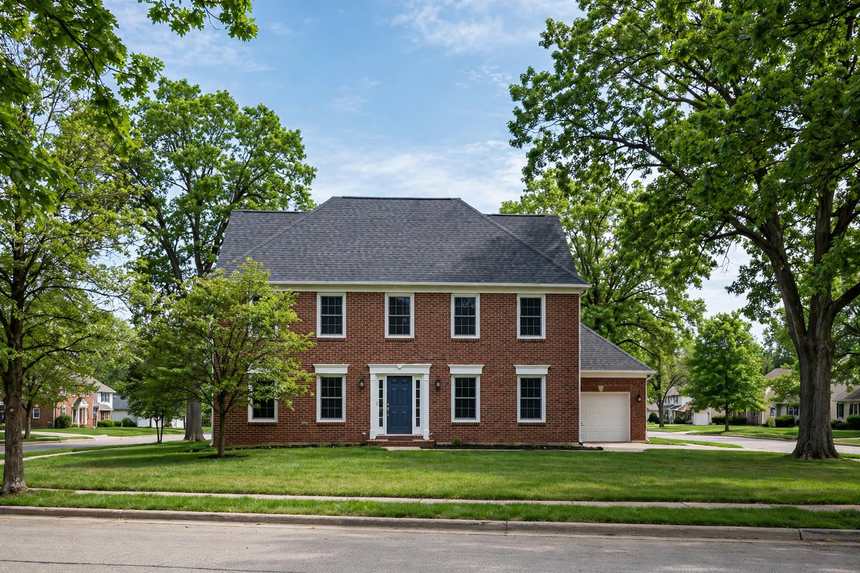
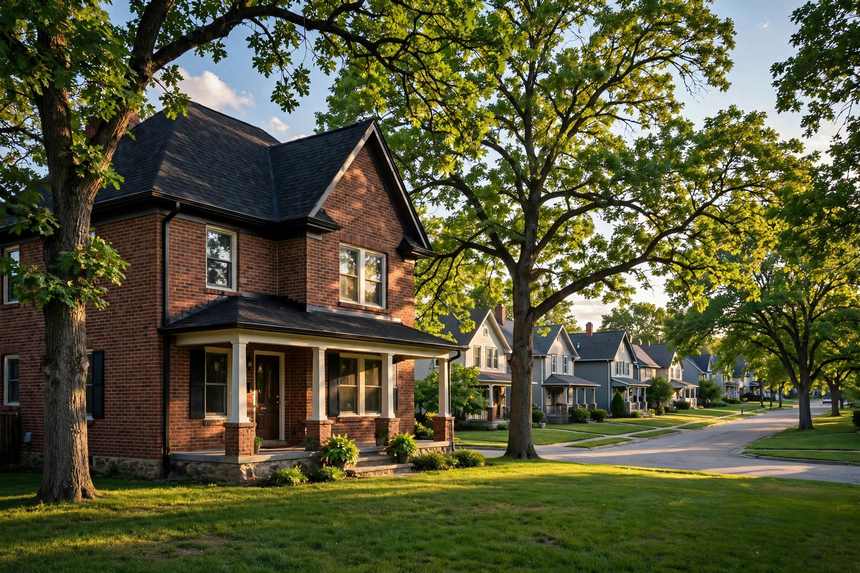
Pitched roofs on neighborhood homes

For homes in Waterbury

Waterbury's homes come from three development phases and the plats that named them: Grand Avenue Heights, Walnut Hill Place, and Oak Lawn Place. Roofing plans follow the individual house, its roofline, and its lot.

  • Grand Avenue Heights
  • Walnut Hill Place
  • Oak Lawn Place
  • Primarily single-family homes
For homes on rolling, topography-following streets

For homes on rolling, topography-following streets

Streets laid out to follow the topography give each house its own exposure and drainage pattern. Roof planes face different directions, water runs differently across each lot, and gutters and downspouts must be placed with the slope in mind rather than by habit.

  • Varied roof exposures
  • Complex lot drainage
  • Mature oak canopy
  • Multi-family homes near Ingersoll Avenue

Roofing Problems on Waterbury's Large Roofs

The problems below follow from Waterbury's scale, slope, and canopy: large complex roofs, rolling lots, and mature oak cover. Each is described so it can be recognized and discussed.

  • Ice dams on large, shaded roofs

    Ice dams on large, shaded roofs

    A large attic leaking heat melts snow high on the roof, and the meltwater refreezes at the eaves. The prevention is attic air sealing and ventilation, plus the required ice barrier at re-roof time. No removal service is claimed.

  • Hail and wind on varied exposures

    Hail and wind on varied exposures

    Rolling topography gives each roof plane its own wind and hail exposure, and damage is often uneven across a large roof. Hail days in Des Moines run April 14 to September 6, with June the busiest month. Each plane should be documented after a storm.

  • Leaks at valleys, dormers, and chimneys

    Leaks at valleys, dormers, and chimneys

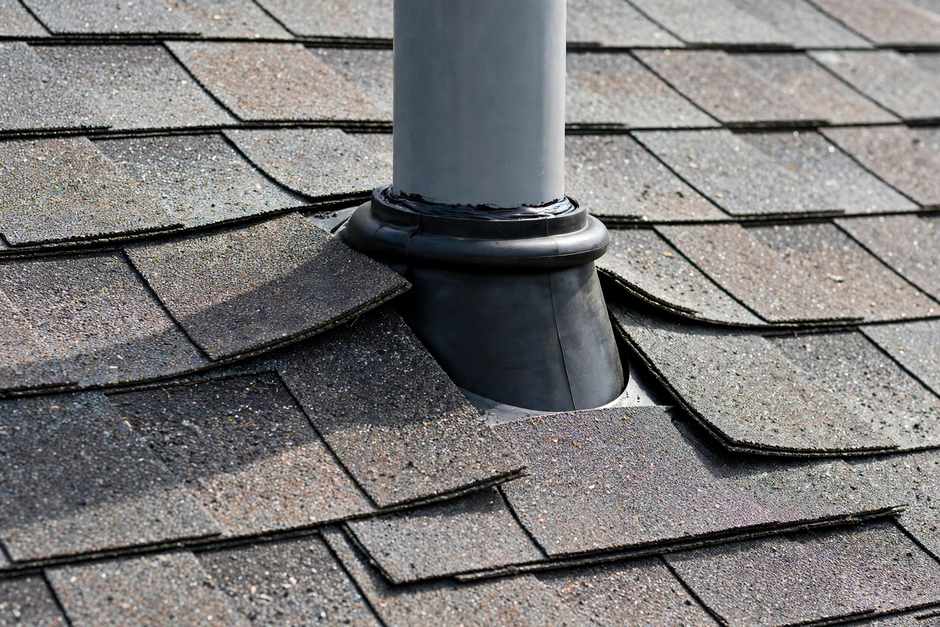
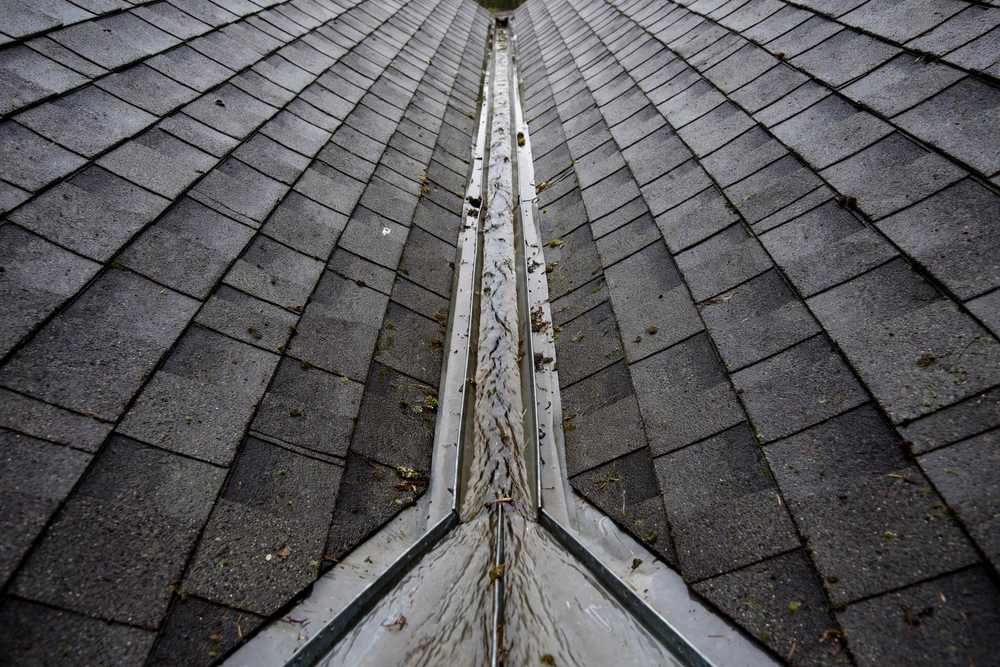
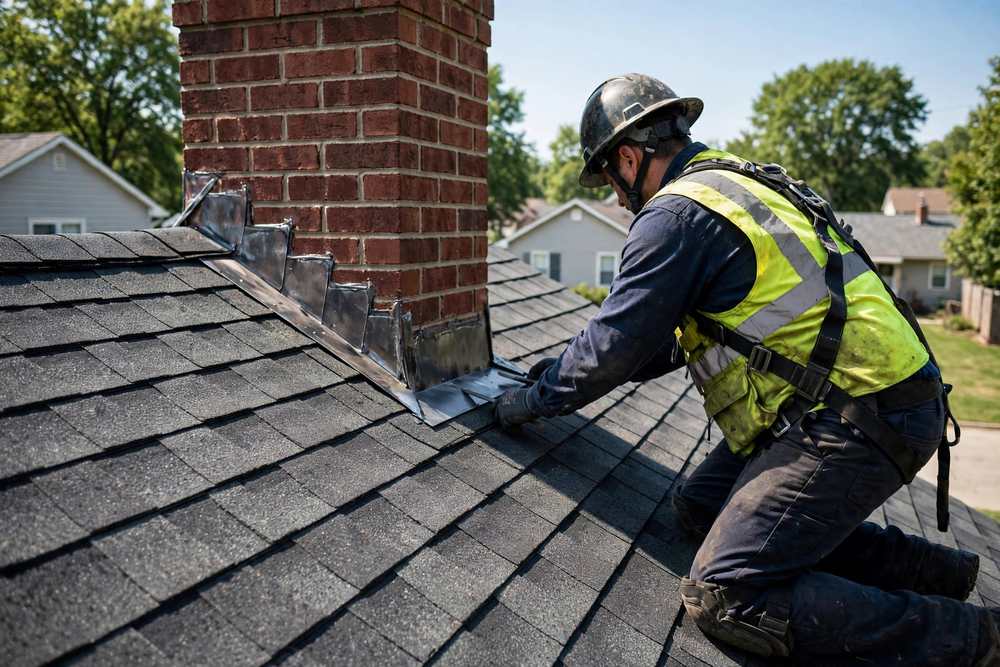
    Complex rooflines multiply the joints where water enters. Chimney flashing is roofer work; crown and brick are mason work, and a leak report should say which side the problem falls on before a repair is scoped.

  • Gutters on sloping, tree-covered lots

    Gutters on sloping, tree-covered lots

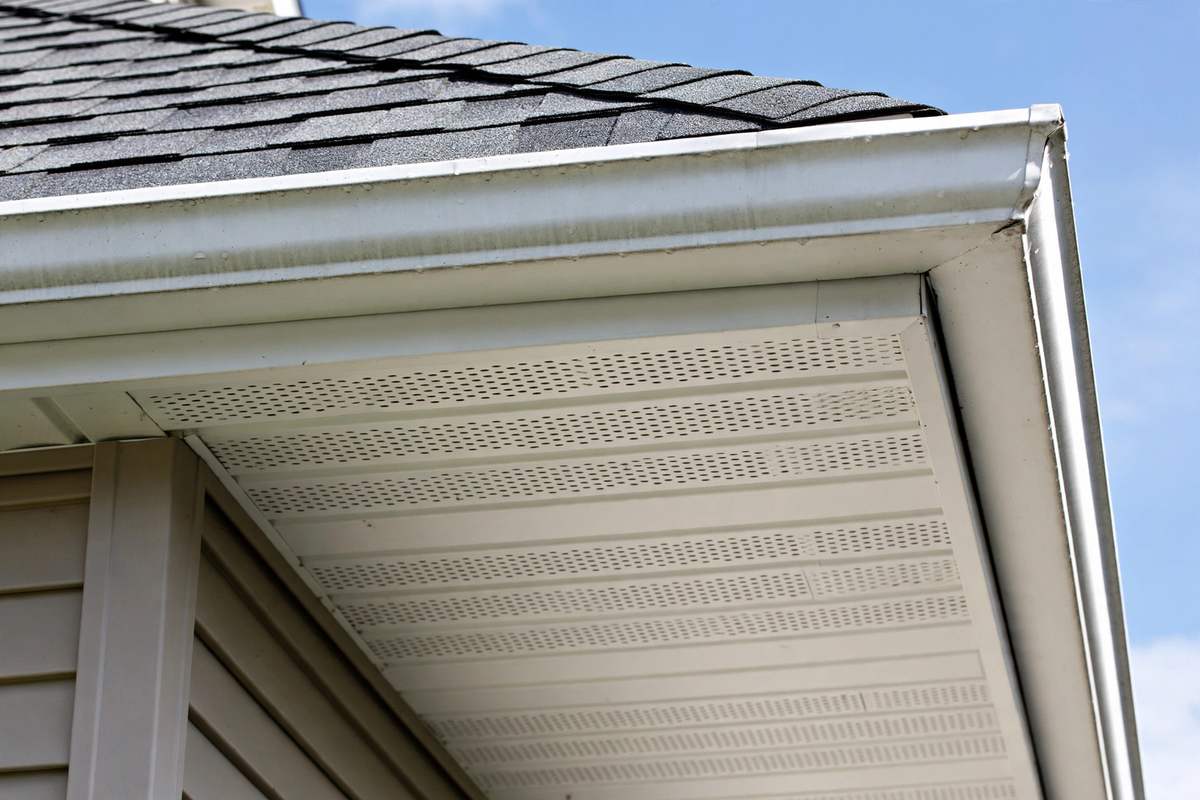
    The oak canopy loads gutters with leaves, and sloping lots move water fast when gutters spill. Gutter installation, repair, guards, and downspouts keep roof water moving away from the house; gutter cleaning is not offered as a standalone service.

Signs a Waterbury Roof Needs Attention

On a large roof, these signs can sit on one plane while the rest looks sound. A full-roofline inspection finds what a single view misses.

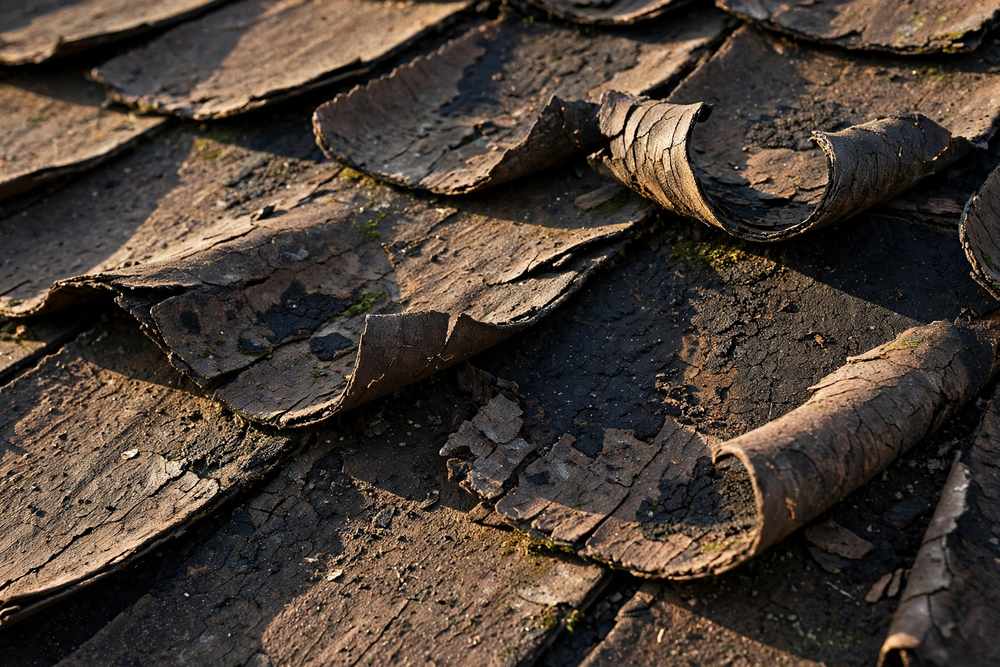
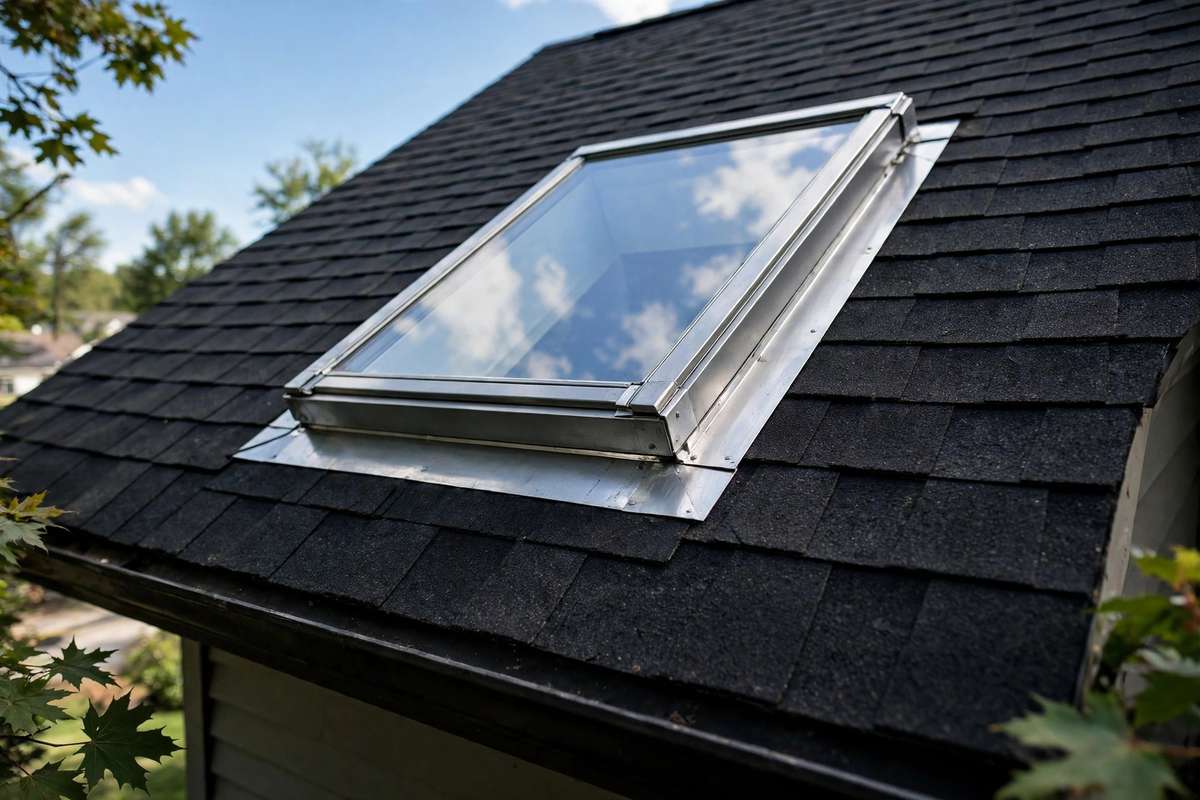
Roof surface showing signs of wear
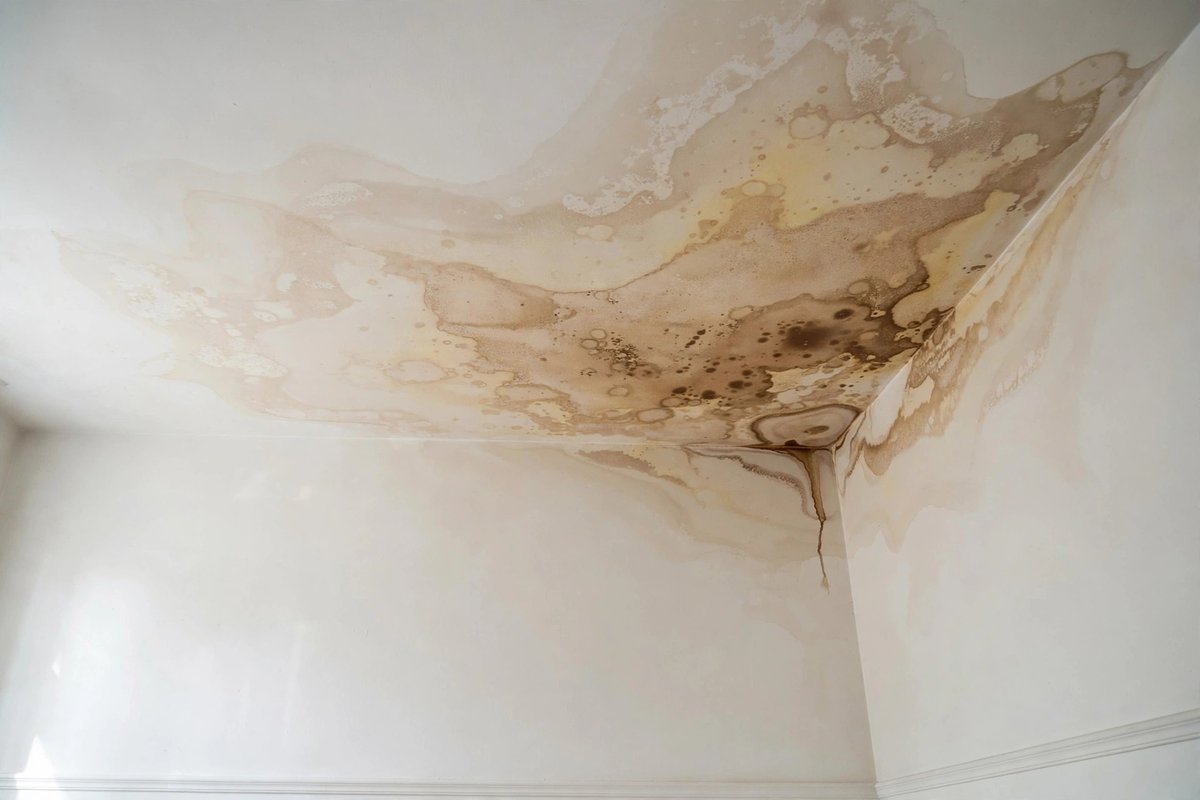
  • Stains on ceilings or walls

    When a stain appears after rain, the source is usually flashing, a valley, or a damaged course, and on a large roof the entry point may be well away from the stain. The work starts with tracing the path, not with the stain itself.

  • Shingles curling or missing

    Aging shingles curl and crack, and wind removes the weakest courses. Each plane should be checked, since exposures differ across a rolling lot.

  • Granules collecting in gutters

    Granule deposits track how shingles are aging, and a surge after hail deserves a record. On tree-covered lots, leaf debris mixes with the granules in gutters and valleys.

  • Sagging or soft decking

    Dips across a broad plane suggest decking that has gone soft from moisture. Where the attic can be entered, the underside shows the affected area's size, and the repair scope should be written from what it shows.

  • Daylight in the attic

    On a large roof, light through the boards can show in more than one place, and every gap admits water and air. Gaps at penetrations and gaps from damaged boards take different repairs.

What Waterbury Houses Call For

Waterbury's roofing story is topography, scale, and canopy, plus a bounds record that disagrees with itself. The notes below take each honestly, then the citywide rules.

  • No single bound set is stated

    Published descriptions of Waterbury's edges contradict one another: one guide places the neighborhood south of Grand Avenue and north of I-235, another gives I-235, 63rd Street, Grand Avenue, and Polk Boulevard, and an AI-generated guide reverses Grand and Ingersoll. The association's own history and plans agree on the neighborhood's substance but do not settle a single street-bound set in the sources found. This page therefore states no single bound set, and describes Waterbury by its plats, its phases, and its topography instead. Freeway construction in the early 1960s along Center Street severed the neighborhood and set its northern border, according to the association history.

  • Topography-following streets and drainage

    Waterbury is described as one of the first neighborhoods designed to follow the topography, and the consequence for roofing is varied exposure and complex drainage, inferred from the terrain. Each lot's slope shapes how water leaves the roof and the ground, so gutter and downspout placement, and the inspection's attention to drainage, should follow the individual lot rather than a standard pattern.

  • Large roofs under a mature oak canopy

    The neighborhood's mature oak canopy and rolling terrain are documented in the association history and strategic plan. Large early-20th-century pitched roofs with complex forms are the inferred roof picture, offered as general guidance, and the canopy's roofing consequences are debris loading, shade that keeps planes damp, and branch contact. No city park sits inside the neighborhood's bounds.

  • The January 1, 2027 permit change

    A straight re-roof needs no building permit through December 31, 2026, under the City's published handout, unless sheathing or rafters are repaired or replaced. On January 1, 2027, a re-roofing permit becomes required under Council Communication 26-244, adopted 7-0. No 2027 fee, ordinance number, repair threshold, or overlay-versus-tear-off rule is verified. The contractor or the property owner may submit the application.

  • Registration, codes, and the amusement-park land

    Iowa registers contractors under chapter 91C through DIAL. Since January 1, 2026, the 2024 codes have governed, an ice barrier has been required, and the City's design criteria have stood at 33 pounds per square foot of snow load and 115 mile-per-hour wind speed. The Ingersoll amusement-park land, acquired in 1917 by the F. C. Waterbury family, lies in Waterbury, not in the Ingersoll Park neighborhood. No historic district covers Waterbury, and no registration claim for this business is published here.

Places That Orient a Waterbury Roofing Visit

These orientation points come from Waterbury's own association history and plans: the plats, the first home, the park across Grand, and the avenue with multi-family homes.

  • 607 Country Club Boulevard

    The first home in Waterbury, completed in 1900 for Frank Calvin Waterbury. Country Club Boulevard anchors the neighborhood's earliest building.

  • Grand Avenue Heights

    The Shriver plat from the first development phase, 1906 to 1911. The plat name survives as the neighborhood's earliest subdivision identity.

  • Walnut Hill Place

    The Frick plat from the later phases, north of Grand Avenue and west of 56th Street. Its streets follow the rolling ground of the area.

  • Oak Lawn Place

    The F. C. Waterbury plat, north of Ingersoll Avenue, from 49th to 54th Streets. The plat covers the eastern part of the neighborhood's building history.

  • Greenwood and Ashworth Park

    The park immediately south across Grand Avenue, with the Art Center. Waterbury has no city park inside its bounds, and this park is its nearest large open space.

  • Ingersoll Avenue

    The avenue along and near which the neighborhood's multi-family homes sit. The avenue also carries the name shared with the amusement park whose land lies in Waterbury.

Where Waterbury Sits in Des Moines

Waterbury sits in the western part of Des Moines, on rolling ground around the Grand Avenue and Ingersoll Avenue corridors, with Greenwood and Ashworth Park immediately south across Grand Avenue. Because published descriptions of its edges disagree, this page states no single street-bound set, and instead describes the neighborhood by its three plats: Grand Avenue Heights, Walnut Hill Place, and Oak Lawn Place.

  • Grand Avenue Heights
  • Walnut Hill Place
  • Oak Lawn Place
  • Country Club Boulevard

Roofing Situations in Waterbury

  • A valley leak on a large complex roof

    The situation

    Water stains appear below a valley where several pitched planes meet on a large early-20th-century home. The roofline is complex, and the stain sits below no single obvious joint.

    The approach

    Mapping the full roofline means checking every valley and dormer flashing run, plus the attic side. The scope should then name the valley work and the full flashing picture for the roof.

  • Drainage problems on a sloping lot

    The situation

    Water runs fast off a sloping lot during heavy rain, and gutters spill at the low corners. The ground below the eaves stays wet, and the fascia shows dampness.

    The approach

    Gutter and downspout work should be placed with the lot's slope in mind, so water is carried away from the house. The inspection should note the drainage pattern rather than assume a standard layout.

  • Hail across varied exposures

    The situation

    After a June storm, some planes show bruising and granule loss while others, facing away from the storm, look untouched. The roof is large, and the damage is uneven.

    The approach

    Photos of each plane, taken after the storm, let the repair-or-replacement decision rest on the whole roof. The inspection promises no insurance outcome along the way.

What Google reviewers say about ZT Contracting LLC

5.05.0 stars from 16 Google reviews

  • These guys are amazing! This was my first experience with needing damage repairs on our roof and I was worried it would be a stressful process. Tim was incredibly informative and answered any questions we had, even worked with our insurance to get our needs met. They completed our home within a day, and even kept us updated on the progress when we had to leave town. It's beautifully done, and I will absolutely use them again. Thank you again to the whole crew!
    StephanieGoogle review · 3 months ago
  • They did an awesome job! Our job was a small one, but they didn't hesitate to do it when bigger companies felt it wasn't worth their time. Friendly and professional! I would recommend ZT Contracting for your siding & roofing needs.
    Shelly LacyGoogle review · 3 months ago
  • I had a roof stripped off and new installed by ZT contracting. They were very professional with great communication. It was definitely faster than expected and even came in under budget. I am more than satisfied with the quality of work and company. Thank you ZT CONTRACTING. I'm sure you'll see me again.
    Joe MueggenbergGoogle review · 6 months ago
  • I have had the best experience with ZT Contracting. The company and it's workers are hard working, time efficient ,and helpful . Their employees go above and beyond to produce quality work and amazing outcomes. Highly recommend.
    Anthony PolsonGoogle review · a year ago
  • Did great work! Very professional, easy to work with and had great communication. Great price and value compared to other contractors!
    NicoleGoogle review · a year ago

Waterbury Roofing Through the Seasons

  • Spring

    Hail season starts in mid-April, when spring rain finds the leaks at valleys and dormers on large roofs. Every plane should be covered by a spring inspection before the June hail peak.

  • Summer

    June is the busiest hail month, and summer storms hit Waterbury's varied exposures unevenly. Post-storm inspections should document each plane and ridge, including shaded planes under the oak canopy.

  • Fall

    September to November is the window to finish repairs and confirm gutters drain before winter. The mature oak canopy drops a heavy leaf load, and gutters and valleys need attention in fall.

  • Winter

    From December through March, ice dams are the seasonal risk, with 36.5 inches of snow in the NOAA 1991–2020 normals. The prevention measures are ventilation and the ice barrier, on large roofs as on small ones.

What to Ask Before Hiring a Roofer in Waterbury

Waterbury's houses reward questions about scale, slope, and canopy, alongside the usual questions about scope and rules.

  • How will you handle a large, complex roofline?

    Ask how the scope describes valleys, dormers, and flashing joints across the full roofline. On a large Waterbury roof, a scope that names only the shingles is missing the work that matters.

  • How does the lot's slope affect drainage?

    Ask how gutters and downspouts will be placed with the slope in mind, and how the inspection accounts for the lot's drainage pattern. Rolling ground makes standard layouts unreliable.

  • What will the inspection cover?

    Ask whether shingles, flashing, valleys, dormers, gutters, and ventilation get covered, with photos, and whether canopy contact and shaded planes are noted.

  • What are the permit and registration rules?

    Permits follow the calendar: no City permit for a straight re-roof through December 31, 2026, unless sheathing or rafters are repaired or replaced, and a re-roofing permit required starting January 1, 2027. Registration follows chapter 91C through DIAL, and a homeowner may request the number and check it.

  • Is any historic review required here?

    No historic district covers Waterbury, so roofing work here is not subject to local design review. The neighborhood's history is told through its plats and phases, not through a design-review district.

FAQs About Roofing in Waterbury

Still wondering? (515) 385-2566

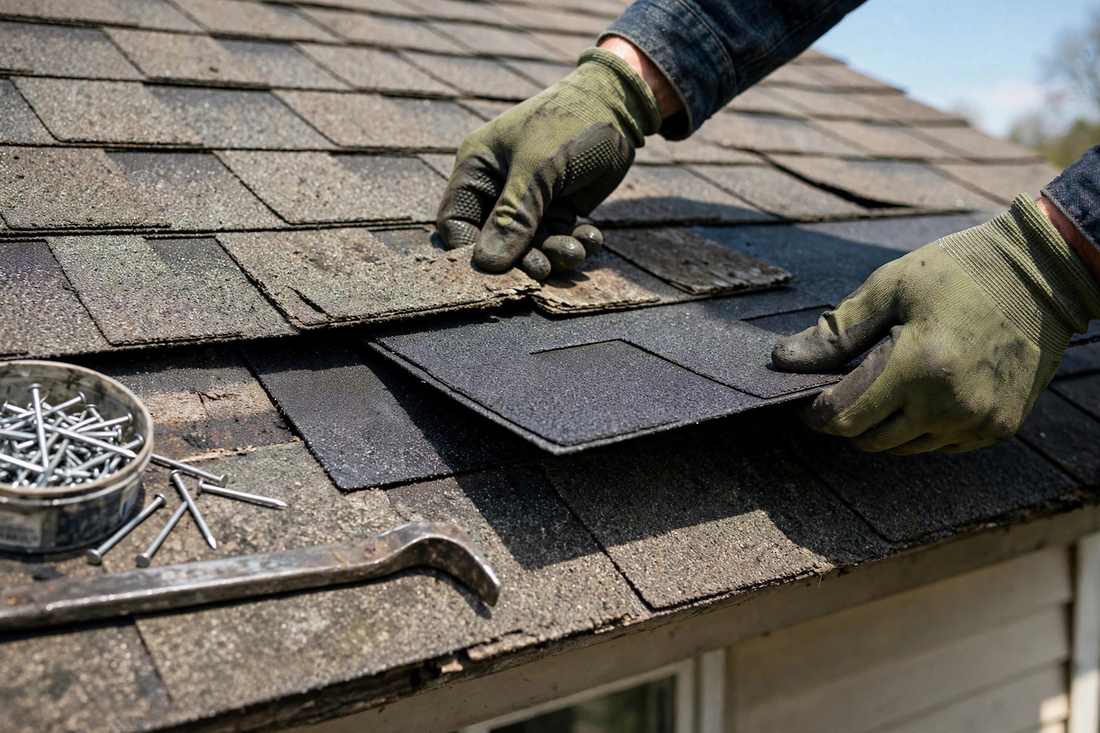
Inspecting a roof surface

Call ZT Contracting LLC About Roofing in Waterbury

For a Waterbury roof inspection, repair, or replacement, call (515) 385-2566. Business hours are Monday through Saturday, 8 AM to 6 PM, and the business is closed on Sunday.

Get Your Roof Inspected in Waterbury

Call (515) 385-2566 to discuss a roof in Waterbury. Hours are Monday through Saturday, 8 AM to 6 PM, with Sunday closed. ZT Contracting LLC is located at 3501 Bowdoin St, Des Moines, IA 50313. If water is coming in, say so when you call so the conversation starts with the leak.